
The hidden backbone of a safe construction site
When you walk past a major construction project in London or Manchester, your eyes are usually drawn to the rising steel frames or the sleek glass cladding being installed. What most people don’t see—and what many junior site workers often overlook—is the complex web of temporary structures holding everything together while the permanent building finds its feet. From the scaffolding that reaches into the clouds to the massive props holding up basement walls, temporary works are everywhere. And at the heart of making sure those structures don’t fail is the Temporary Works Supervisor.
It is easy to think of site safety as a series of generic checklists, but the reality of being a Temporary Works Supervisor is far more nuanced. It is a role that requires a sharp eye, a deep understanding of engineering principles, and the confidence to tell a site manager that work needs to stop because something doesn’t look right. It is not just about health and safety in a bureaucratic sense; it is about preventing catastrophic structural failures that could cost lives and bring a project to a complete standstill.
What exactly do we mean by temporary works
Before diving into the specifics of the role, it is worth clarifying what falls under the remit of temporary works. In the UK, we follow the BS 5975 code of practice, which provides a very clear framework for how these elements should be managed. Temporary works are essentially any parts of a construction project that are needed to enable the permanent works to be built. They aren’t intended to stay there once the job is done.
Common examples include:
- Scaffolding and access towers
- Formwork and falsework for concrete pouring
- Trench supports and excavations
- Cranes and their foundations (outrigger pads)
- Propping and shoring for structural alterations
- Site hoarding and fencing
Because these structures are temporary, there is sometimes a dangerous temptation to treat them with less respect than the permanent building. This is where the Temporary Works Supervisor comes in. Their job is to ensure that the design for these temporary elements is actually followed on the ground, and that they remain safe throughout their entire lifecycle.
The daily life of a Temporary Works Supervisor
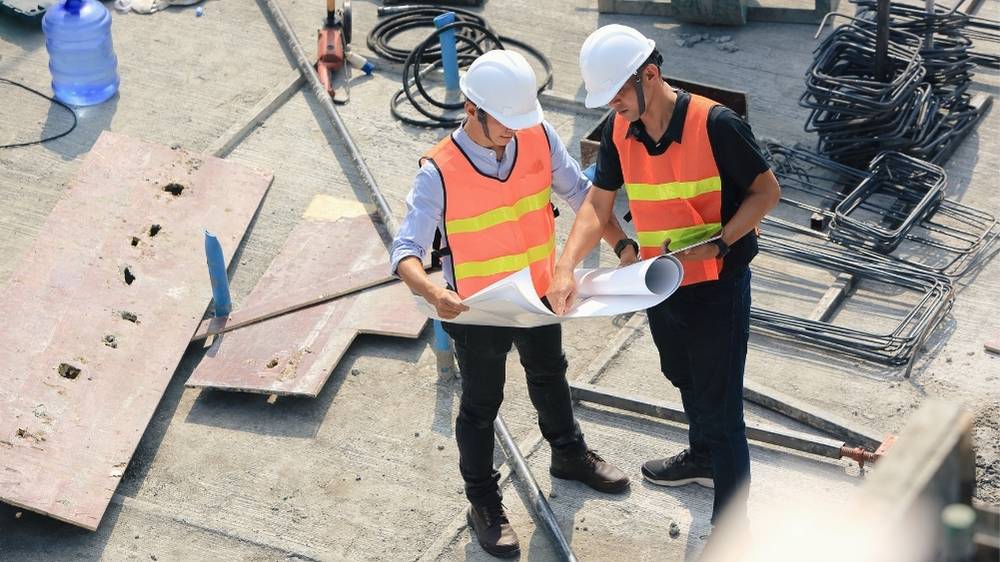
If you are stepping into this role, your day usually starts long before the concrete arrives or the crane begins its lift. A Temporary Works Supervisor is responsible for the supervision and control of the relevant temporary works on-site. While they usually report to a Temporary Works Coordinator (TWC), who handles the broader management and design side, the TWS is the person with their boots on the ground, making sure the reality matches the drawings.
One of the most critical parts of the job is the ‘Permit to Load’ and ‘Permit to Dismantle’ system. You can’t just start pouring tonnes of wet concrete onto a piece of falsework because it looks sturdy. The supervisor must inspect the structure, compare it against the approved design, and confirm that every bolt, pin, and brace is exactly where it should be. Only then is the permit signed, and the work allowed to proceed.
This process requires a high level of discipline. On a busy site, there is always pressure to move faster. Subcontractors might want to skip a minor bracing element to save half an hour, or they might try to use a slightly different material because the specified one is at the other end of the site. The supervisor is the one who has to stand firm and ensure that standards are never compromised for the sake of the programme.
Why this role is distinct from the Coordinator
There is often some confusion about the difference between a Coordinator and a Supervisor. In simple terms, the Coordinator (TWC) is the manager of the process. They organise the design, ensure that the various parties are talking to each other, and maintain the Temporary Works Register. They look at the project from a bird’s-eye view.
The Temporary Works Supervisor, however, is focused on the implementation. They are the eyes and ears of the TWC. On smaller sites, one person might occasionally take on both roles if they have the right experience, but on larger, more complex projects, having a dedicated supervisor for specific areas of the work is essential for maintaining safety. They are there to spot the small errors—a base plate that isn’t level, a scaffold tie that has been removed by another trade, or an excavation that is showing signs of instability after a heavy rainstorm.
The skills that actually matter for a TWS
While having a background in trades or engineering is helpful, being a successful supervisor comes down to a few specific traits that you won’t always find in a textbook:
- Attention to Detail: You have to be the kind of person who notices when a single bolt is missing from a massive assembly.
- Communication: You need to be able to explain technical requirements to workers who might be tired, frustrated, or under pressure.
- Integrity: You must be willing to make unpopular decisions if it means keeping the site safe.
- Risk Perception: You need to be able to look at a situation and understand how it might change—for example, how a change in weather might affect the ground stability under a crane.
The path to getting qualified
You cannot simply decide to be a Temporary Works Supervisor one morning; you need to demonstrate that you have the competence and the specific training required by the industry. Most contractors in the UK require supervisors to have completed a CITB-accredited training course. This course isn’t just a formality; it covers the legalities of BS 5975, the various classes of temporary works, and the specific paperwork and inspection regimes that must be followed.
The training helps bridge the gap between being a skilled tradesperson and being a supervisor who understands the broader engineering risks. It teaches you how to read temporary works designs, which are often different from permanent architectural drawings, and how to spot common failure points in things like proprietary propping systems or timber hoardings.
Beyond the classroom, experience is the greatest teacher. Most people who move into this role have spent years on-site seeing how things are built (and sometimes, how they fail). That practical knowledge is what allows a supervisor to look at a structure and instinctively know if something feels ‘off’ before they even pull out their tape measure.

Managing the risks in a changing environment
Construction sites are not static environments. A trench that was perfectly safe on Monday might become a death trap on Wednesday if there has been a leak or heavy rainfall. A scaffold that was signed off as safe might be compromised if another contractor removes a section of boarding to get their materials through a window. This is why the role of the supervisor is an ongoing commitment, not a one-time check.
Regular inspections are a core part of the job. It is about maintaining a constant state of vigilance. The supervisor needs to ensure that everyone on-site understands that temporary works are not just ‘temporary’ in the sense of being unimportant, but ‘temporary’ in the sense that they are often more vulnerable to change and environmental factors than the finished building will ever be.
By fostering a culture where temporary works are respected, the supervisor does more than just prevent accidents; they contribute to the overall efficiency of the project. A site where temporary works are well-managed is a site where work flows smoothly, where there are fewer delays due to remedial works, and where everyone goes home safely at the end of the shift. It is a challenging, often high-pressure role, but for those who take pride in the technical side of construction, it is incredibly rewarding.

A fashion journalist known for her trend forecasting and deep dives into seasonal runway analyses. Talia specialises in modern womenswear, sustainable fashion, and high-street vs. haute couture crossovers.